- Welcome to Tengjun New Materials (Thailand) Co., Ltd.!
- Return to Home | Add to Favorites | Contact Us

-
For many years, we have focused on polishing fluids, abrasives, polishing pads,
oil thinners, thinners, various cleaning agents, paint removers,
water glass silica sol, and organic solvent products.
-
- Polishing Fluid
Contact us by phone
- Polishing Fluid
-
0622023113

Mobile: 0622023113
WeChat: 15820932092
Email: yuyuancheng839@gmail.com
Thailand Address: Chonburi, Thailand
China Address: Building 4, No. 692, Dalingshan Section, Shida Road, Dalingshan Town, Dongguan City, Guangdong Province, China
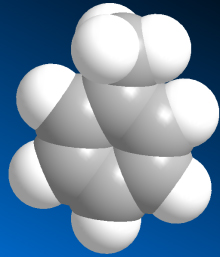
Toluene molecular ratio model
Appearance and Properties: Colorless, transparent liquid with an aromatic odor similar to benzene.
Melting Point (°C): -94.9
Relative Density (water=1): 0.87
Boiling Point (°C): 110.6
Relative Vapor Density (air=1): 3.14
Molecular Formula: C7H8
Molecular Weight: 92.14
Saturated Vapor Pressure (kPa): 4.89 (30°C)
Heat of Combustion (kJ/mol): 3905.0
Critical Temperature (°C): 318.6
Critical Pressure (MPa): 4.11
Logarithm of Octanol/Water Partition Coefficient: 2.69
Flash Point (°C): 4
Upper Explosive Limit % (V/V): 7.0
Ignition Temperature (°C): 535
Lower Explosive Limit % (V/V): 1.2
Solubility: Insoluble in water, miscible with most organic solvents such as benzene, alcohols, and ethers.
Chemical Properties
Toluene is chemically reactive, similar to benzene. It can undergo oxidation, sulfonation, nitration, and disproportionation reactions, as well as side-chain chlorination. Toluene can be oxidized to benzoic acid.
Uses:
Toluene is mainly produced from crude oil through petrochemical processes. As a solvent, it is used in oils, resins, natural and synthetic rubber, coal tar, asphalt, and cellulose acetate. It is also used as a solvent in cellulose paints and varnishes, and as a solvent for photographic plates and inks. Toluene is also a key raw material in organic synthesis, especially in the synthesis of benzoyl chloride and phenyl, saccharin, trinitrotoluene, and many dyes. It is also a component of aviation and automotive gasoline. Toluene is volatile and relatively unreactive in the environment. Due to air movement, it is widely distributed in the environment and continuously recycles between air and water bodies through rain and evaporation from water surfaces, eventually potentially being degraded by biological and microbial oxidation. A summary of average toluene concentrations in the air of many cities worldwide shows that toluene concentrations are typically 112.5-150 μg/m³, primarily due to gasoline-related emissions (vehicle exhaust, gasoline processing), as well as solvent losses and emissions from industrial activities.
Toluene is widely used as a solvent and high-octane gasoline additive, and is also an important raw material in organic chemicals. However, compared to benzene and xylene, which are obtained from both coal and petroleum, current production is relatively excessive. Therefore, a considerable amount of toluene is used for dealkylation to produce benzene or disproportionation to produce xylene. A series of toluene-derived intermediates are widely used in the production of fine chemicals such as dyes, pharmaceuticals, pesticides, explosives, auxiliaries, and fragrances, and are also used in the synthetic materials industry. Side-chain chlorination of toluene yields benzyl chloride, benzyl dichlorobenzyl, and benzyl trichlorobenzyl, including their derivatives benzyl alcohol, benzaldehyde, and benzoyl chloride (generally also obtained from the phosgenation of benzoic acid), which are widely used in pharmaceuticals, pesticides, dyes, and especially fragrance synthesis. Cyclochlorination products of toluene are intermediates in pesticide, pharmaceutical, and dye synthesis. Toluene oxidation yields benzoic acid, an important food preservative (primarily used as its sodium salt) and also an intermediate in organic synthesis. Intermediates obtained through sulfonation of toluene and benzene derivatives include p-toluenesulfonic acid and its sodium salt; CLT acid; toluene-2,4-disulfonic acid; benzaldehyde-2,4-disulfonic acid; and toluenesulfonyl chloride, which are used in detergent additives, fertilizer anti-caking additives, organic pigments, pharmaceuticals, and dye production. Toluene nitration yields a large number of intermediates, which can be derived into many final products, most importantly in polyurethane products, dyes and organic pigments, rubber additives, pharmaceuticals, and explosives.
-
About Tengjun
About Us Corporate Image Application Cases Leave a Message Contact Us -
Product Center
Silica Sol Series Polishing Fluids, Abrasive Fluids, and Polishing Pads Series Paint thinner, paint thinner, cleaning, and paint stripper series Organic Solvents Series View More + -
News
Company NewsIndustry NewsFrequently Asked Questions
0622023113(Please feel free to contact us for inquiries)
Pre-sales, sales, and after-sales online services