- Welcome to Tengjun New Materials (Thailand) Co., Ltd.!
- Return to Home | Add to Favorites | Contact Us
-
For many years, we have focused on polishing fluids, abrasives, polishing pads,
oil thinners, thinners, various cleaning agents, paint removers,
water glass silica sol, and organic solvent products.
-
- Polishing Fluid
Contact us by phone
- Polishing Fluid
-
0622023113

Mobile: 0622023113
WeChat: 15820932092
Email: yuyuancheng839@gmail.com
Thailand Address: Chonburi, Thailand
China Address: Building 4, No. 692, Dalingshan Section, Shida Road, Dalingshan Town, Dongguan City, Guangdong Province, China
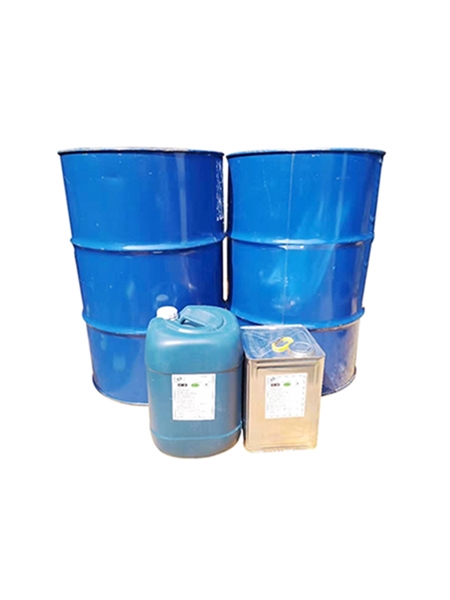
Physical Properties
1. Appearance: Colorless, viscous, stable, hygroscopic liquid, almost odorless and tasteless, flammable, low toxicity.
2. Boiling Point (ºC, 101.3 kPa): 187.3
3. Melting Point (ºC, Pour Point): -60
4. Relative Density (g/mL, 20/20ºC): 1.0381
5. Relative Density (20℃, 4℃): 1.0362
6. Refractive Index (n, 20ºC): 1.4329
7. Viscosity (mPa·s, 0ºC): 243
8. Viscosity (mPa·s, 20ºC): 56.0
9. Viscosity (mPa·s, 40ºC): 18
10. Flash point (ºC, closed cup): 98.9
11. Flash point (ºC, open cup): 107
12. Ignition point (ºC): 421.1
13. Heat of combustion (kJ/mol, isobaric): 1827.5
14. Heat of combustion (kJ/mol, isovolic): 1825.0
15. Heat of combustion (kJ/mol, 20ºC, 101) 16. Heat of vaporization (kJ/kg): 538.1
17. Heat of formation (kJ/mol, 20ºC): 500.3
18. Specific heat capacity (kJ/(kg·K), 20ºC, isobaric): 2.48
19. Critical temperature (ºC): 351
20. Critical pressure (MPa): 5.9
21. Thermal conductivity (W/(m·K)): 0.217714 22. Lower Explosive Limit (%, V/V): 2.6
23. Upper Explosive Limit (%, V/V): 12.5
24. Coefficient of Expansion (K⁻¹, 20ºC): 0.000695
25. Coefficient of Expansion (K⁻¹, 55ºC): 0.000743
26. Vapor Pressure (kPa, 55ºC): 0.19
27. Solubility: Miscible with water, ethanol, ether, chloroform, acetone, and many other organic solvents. While its solubility for hydrocarbons, chlorinated hydrocarbons, and oils is low, it is stronger than that for ethylene glycol.
28. Relative density (25℃, 4℃): 1.0328
29. Refractive index at room temperature (n25): 1.4314
30. Solubility parameter ((J·cm⁻³)¹/²): 29.516
31. Van der Waals area (cm²·mol⁻¹): 6.960 × 10⁹
32. Van der Waals volume (cm³·mol⁻¹): 46.760
33. Standard heat of combustion in the gas phase (enthalpy) (kJ·mol⁻¹): -1902.55
34. Standard claimed heat of combustion in the gas phase (enthalpy) (kJ·mol⁻¹) 35. Standard enthalpy of combustion in liquid phase (kJ·mol⁻¹): -1838.14
36. Standard enthalpy of claim in liquid phase (kJ·mol⁻¹): -485.72
37. Standard heat of melt in liquid phase (J·mol⁻¹·K⁻¹): 189.9
Applications
1,2-Propanediol is an important raw material for unsaturated polyesters, epoxy resins, polyurethane resins, plasticizers, and surfactants, accounting for approximately 45% of total propylene glycol consumption. This unsaturated polyester is widely used in surface coatings and reinforced plastics. 1,2-Propanediol has good viscosity and hygroscopicity, and is widely used as a humectant, antifreeze, lubricant, and solvent in the food, pharmaceutical, and cosmetic industries. In the food industry, 1,2-Propanediol reacts with fatty acids to form propylene glycol fatty acid esters, mainly used as food emulsifiers; 1,2-Propanediol is also an excellent solvent for flavorings and colorings. Due to its low toxicity, 1,2-propanediol is used as a solvent for flavorings and food colorings in the food industry. In the pharmaceutical industry, it is commonly used as a solvent, softener, and excipient in the manufacture of various ointments and creams. It is also used as a blending agent, preservative, and solvent for ointments, vitamins, and penicillin. Because of its good miscibility with various flavorings, propylene glycol is also used as a solvent and softener in cosmetics. 1,2-Propanediol is also used as a tobacco humectant, a mildew inhibitor, a solvent for lubricating oils in food processing equipment, and a solvent for food marking inks. Aqueous solutions of 1,2-propanediol are effective antifreeze agents. It is also used as a tobacco wetting agent, a mildew inhibitor, a fruit ripening and preservative, an antifreeze, and a heat transfer fluid.
-
About Tengjun
About Us Corporate Image Application Cases Leave a Message Contact Us -
Product Center
Silica Sol Series Polishing Fluids, Abrasive Fluids, and Polishing Pads Series Paint thinner, paint thinner, cleaning, and paint stripper series Organic Solvents Series View More + -
News
Company NewsIndustry NewsFrequently Asked Questions
0622023113(Please feel free to contact us for inquiries)
Pre-sales, sales, and after-sales online services