- Welcome to Tengjun New Materials (Thailand) Co., Ltd.!
- Return to Home | Add to Favorites | Contact Us
-
For many years, we have focused on polishing fluids, abrasives, polishing pads,
oil thinners, thinners, various cleaning agents, paint removers,
water glass silica sol, and organic solvent products.
-
- Polishing Fluid
Contact us by phone
- Polishing Fluid
-
0622023113

Mobile: 0622023113
WeChat: 15820932092
Email: yuyuancheng839@gmail.com
Thailand Address: Chonburi, Thailand
China Address: Building 4, No. 692, Dalingshan Section, Shida Road, Dalingshan Town, Dongguan City, Guangdong Province, China
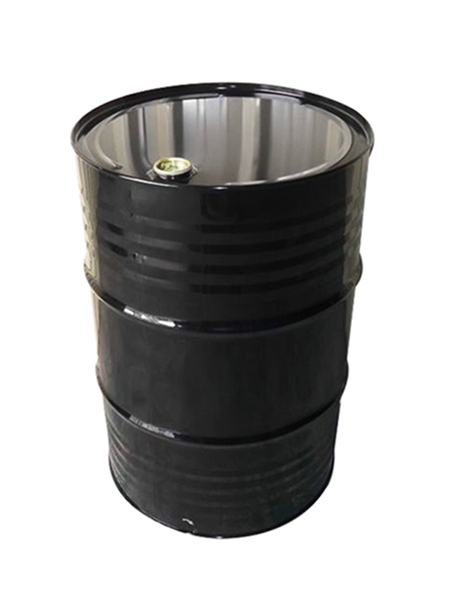
Dimethyl ester (DBE)
Commonly known as MDBE, methyl nylonate is a high-boiling-point environmentally friendly solvent. DuPont names it DBE, while Solvay names it DME. In China, it is also known as NME.
DBE is a mixture of three divalent esters, commonly called methyl nylonate. It is composed of dimethyl succinate (CH3OOC(CH2)2COOCH3), dimethyl glutarate (CH3OOC(CH2)3COOCH3), and dimethyl adipic acid (CH3OOC(CH2)4COOCH3), all excellent environmental solvents. This unique composition makes DBE a non-toxic, colorless, and transparent liquid with a faint ester aroma. It possesses superior dissolving power and is a biodegradable, environmentally friendly, high-boiling-point solvent widely used in automotive coatings, color steel plate coatings, can coatings, enameled wire, and appliance and furniture wood coatings, among other industries.
The DBE product line includes pure dimethyl succinates of succinic acid, glutaric acid, and adipic acid, as well as mixtures of these in varying proportions. During production, methanol is first reacted with the mixed diacids, followed by distillation to separate the different products. Precise control of the esterification and separation processes ensures extremely low moisture content, methanol content, color, and acid value in DBE.
Chemical Properties:
DBE products are highly stable under normal temperature and humidity conditions. They exhibit typical ester functional group characteristics, including saponification and hydrolysis. Transesterification is primarily used to convert ester products into useful plasticizers and other polyester products.
With increasing emphasis on environmental protection and safety, more and more laws and regulations stipulate or recommend against the use of harmful solvents, such as chlorinated solvents (trichloroethane, chloromethane, etc.), ethylene glycol ethers, and ethanol ether acetate solvents. DBE products are the best alternatives to these solvents and can also fully meet the growing demand for VOCs.
Technical Specifications:
Ester Content: >99%
Acid Value: <0.3mgKOH/g
(Methanol + Water): ≤0.3%
Boiling Range: 196~225℃
Physical Properties:
Appearance: Colorless transparent liquid with a slightly bitter, pleasant aroma
Color (Pt-Co): <100
Average Molecular Weight: 159
Specific Gravity d4 (subscript) 25 (superscript): 1.089
Resistivity at 24℃: 0.5 MΩ
Freezing Point: -20℃
Flash Point (Tiger Closed Cup): 100℃
Viscosity at 25℃: 2.4 centistokes
Autoignition Temperature: 366℃
Refractive Index at 23℃: 1.4220
Vapor Pressure at 20℃: 26.6 Pa
Relative Volatilization Rate at 25℃ (based on butyl acetate = 1): 0.01
Surface Tension at 20℃: 35.6 dynes/cm
Expansion Rate at 20℃: 0.00095%
Characteristics
1. Low toxicity, low odor, low water content, safe to use, and not classified as a hazardous substance under regulations.
2. Excellent dissolving power, with good compatibility with polyurethane resins, acrylic resins, polyester resins, alkyd resins, epoxy resins, etc.
3. Increases the flatness and adhesion of baked enamel, reducing defects such as pinholes, fisheyes, and crater-like defects.
4. High boiling point and long distillation range, helping to regulate the evaporation rate of the entire solvent system.
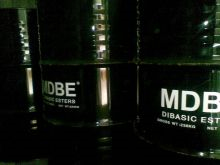
Divalent ester MDBE
5. Promotes improved flexibility and adhesion.
6. Possesses good leveling properties and enhances gloss.
7. In some industrial coatings, it improves pigment hiding power.
8. Good stability; it does not oxidize or decompose during natural storage.
9. Clean combustion vapor with a high calorific value.
Alternative solvents: Can replace highly toxic and odorous isophorone, cyclohexanone, and various high-boiling-point ether solvents.
Main uses:
1. Coil coatings help maintain a balanced evaporation rate, avoiding defects such as film bursting and over-baking caused by excessively rapid evaporation. It imparts a smooth appearance, improved toughness and post-processing properties, and enhanced pigment hiding power.
2. In the baking paint industry, it exhibits sacrificial volatility; as temperature increases, its evaporation rate accelerates faster than other solvents. That is, the evaporation rate is slow in the first half and fast in the second half, which is more conducive to drying.
3. Container/can coatings can effectively replace isophorone, propylene glycol ethers, and ethylene glycol ethyl ether acetate solvents in can and container coatings. High solubility and low evaporation rate give the coating excellent leveling properties, improving its flexibility, adhesion, and other important properties.
4. Automotive coatings can be used in various automotive coatings and resin systems. They can be used in intermediate and topcoat coats to achieve ideal gloss and increase film fullness. Adding a small amount of wetting agent to the formulation can improve leveling and releveling properties.
5. Enamelled wire coatings are excellent solvents for polyvinyl butyral, polyvinyl formal, polyurethane, polyester, and polyesteramide coating formulations. In polyester and polyesteramide systems, it can completely replace cresol, resulting in high-solids, low-coulombure resins. Its non-corrosive nature greatly reduces storage difficulties for users.
6. Wood coatings have a long distillation range and a large buffer zone, giving customers greater flexibility and selectivity in solvent formulation and application conditions. This helps regulate evaporation rates, improves leveling, and prevents surface defects such as white fog and pinholes.
7. In the ink industry, it can replace isophorone, a highly toxic and odorous high-boiling-point solvent used in inks.
8. In the resin industry, its low viscosity allows for both reducing resin viscosity without reducing molecular weight or solids content, and increasing solids content while maintaining the same viscosity. This characteristic allows for the production of high-solids, low-viscosity resins.
9. In polymers and chemical intermediates, it can be used as an organic synthesis intermediate. Polymerization reactions can produce a wide variety of polyesters and other polymers, and it is also a raw material for the production of pharmaceuticals, pesticides, initiators, and a range of other chemical products.
10. It finds ideal applications in cleaning agents, paint removers, and industrial cleaning processes.
-
About Tengjun
About Us Corporate Image Application Cases Leave a Message Contact Us -
Product Center
Silica Sol Series Polishing Fluids, Abrasive Fluids, and Polishing Pads Series Paint thinner, paint thinner, cleaning, and paint stripper series Organic Solvents Series View More + -
News
Company NewsIndustry NewsFrequently Asked Questions
0622023113(Please feel free to contact us for inquiries)
Pre-sales, sales, and after-sales online services