- Welcome to Tengjun New Materials (Thailand) Co., Ltd.!
- Return to Home | Add to Favorites | Contact Us
-
For many years, we have focused on polishing fluids, abrasives, polishing pads,
oil thinners, thinners, various cleaning agents, paint removers,
water glass silica sol, and organic solvent products.
-
- Polishing Fluid
Contact us by phone
- Polishing Fluid
-
0622023113

Mobile: 0622023113
WeChat: 15820932092
Email: yuyuancheng839@gmail.com
Thailand Address: Chonburi, Thailand
China Address: Building 4, No. 692, Dalingshan Section, Shida Road, Dalingshan Town, Dongguan City, Guangdong Province, China
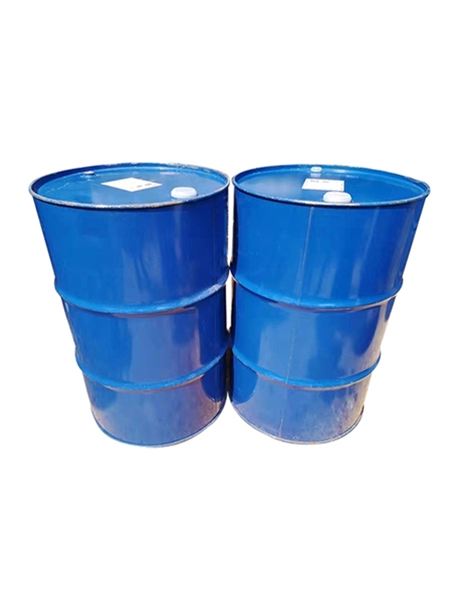
Physical Properties
Appearance: Colorless, transparent, flammable liquid with an ethanol odor.
Boiling Point (atm, °C, 101.3 kPa): 82.45
Melting Point (atm, °C): -87.9
Relative Density (g/mL, 20°C, atm): 0.7863
Relative Vapor Density (g/mL, air=1): 2.1
Relative Molar Mass (g/mL): 60.095
Viscosity (mPa·s, atm; °C): 2.431
Flash Point (atm, °C): 12
Ignition Point (atm, °C): 4 60
Heat of vaporization (kJ/mol): 40.06
Heat of fusion (kJ/kg): 88.26
Heat of combustion (kJ/mol): 1984.7
Heat of formation (kJ/mol): 2005.1
Specific heat capacity (kJ/(kg·K), atm, ℃, isobaric): 2.55
Critical temperature (atm, ℃): 234.9
Critical pressure (MPa): 4.764
Electrical conductivity (S/cm): 35.1 × 10⁻⁷
Thermal conductivity (W/(m·K), atm, °C): 15.49
Vapor pressure (kPa, atm, °C): 4.32
Lower explosive limit (%, V/V): 2
Upper explosive limit (%, V/V): 12
Coefficient of volumetric expansion (K⁻¹, atm, °C): 0.00107
Relative density (20 °C, 4 °C): 0.7855
Refractive index at room temperature (n²⁵): 1.3752
Critical density (g·cm⁻³) : 0.271
Critical Volume (cm3·mol-1): 222
Critical Compressibility Factor: 0.250
Eccentricity Factor: 0.669
Solubility Parameter (J·cm-3) 0.5: 23.575
Standard Heat of Combustion in Gas Phase (Enthalpy) (kJ·mol-1): 2051.42
Standard Free Energy of Formation in Liquid Phase (kJ·mol-1): -180.29
Standard Thermal Melt Rate in Liquid Phase (J·mol-1·K-1): 154.4
Chemical properties
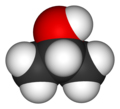
A colorless, transparent liquid with an odor similar to a mixture of ethanol and acetone. It is miscible with alcohols, ethers, chloroform, and water. It can dissolve alkaloids, rubber, shellac, rosin, synthetic resins, and many other organic and some inorganic substances. It forms an azeotrope with water and is insoluble in salt solutions. It is flammable at room temperature, and its vapor readily forms an explosive mixture with air.
Main Uses
It has wide applications as an organic raw material and solvent. As a chemical raw material, it can be used to produce acetone, hydrogen peroxide, methyl isobutyl ketone, diisobutyl ketone, isopropylamine, isopropyl ether, isopropyl chloride, as well as isopropyl esters of fatty acids and chloropropyl fatty acids. In fine chemicals, it can be used to produce isopropyl nitrate, isopropyl xanthate, triisopropyl phosphite, aluminum isopropoxide, and pharmaceuticals and pesticides. It can also be used to produce diisopropyl ketone, isopropyl acetate, thymol, and gasoline additives.
As a solvent, it is a relatively inexpensive industrial solvent with a wide range of applications. It is miscible with water and has a stronger dissolving power for lipophilic substances than ethanol. It can be used as a solvent for nitrocellulose, rubber, coatings, shellac, alkaloids, etc. It can be used in the production of coatings, inks, extractants, and aerosols. It is also used as an antifreeze, detergent, gasoline additive, dispersant in pigment production, fixative in the printing and dyeing industry, and anti-fogging agent for glass and transparent plastics. It is used as a diluent for adhesives and also in antifreeze and dehydrating agents.
As a chromatographic standard, it is used to determine barium, calcium, copper, magnesium, nickel, potassium, sodium, strontium, nitrous acid, cobalt, etc.
It is used as an antifoaming agent in water-based fracturing fluids for oil wells. It forms an explosive mixture with air and can ignite and explode upon contact with open flames or high heat. It reacts violently with oxidizers.
In the electronics industry, it can be used as a cleaning and degreasing agent. In the oil and fat industry, it is used as an extractant for cottonseed oil and can also be used for degreasing animal-derived tissue membranes.
-
About Tengjun
About Us Corporate Image Application Cases Leave a Message Contact Us -
Product Center
Silica Sol Series Polishing Fluids, Abrasive Fluids, and Polishing Pads Series Paint thinner, paint thinner, cleaning, and paint stripper series Organic Solvents Series View More + -
News
Company NewsIndustry NewsFrequently Asked Questions
0622023113(Please feel free to contact us for inquiries)
Pre-sales, sales, and after-sales online services