- Welcome to Tengjun New Materials (Thailand) Co., Ltd.!
- Return to Home | Add to Favorites | Contact Us
-
For many years, we have focused on polishing fluids, abrasives, polishing pads,
oil thinners, thinners, various cleaning agents, paint removers,
water glass silica sol, and organic solvent products.
-
- Polishing Fluid
Contact us by phone
- Polishing Fluid
-
0622023113

Mobile: 0622023113
WeChat: 15820932092
Email: yuyuancheng839@gmail.com
Thailand Address: Chonburi, Thailand
China Address: Building 4, No. 692, Dalingshan Section, Shida Road, Dalingshan Town, Dongguan City, Guangdong Province, China
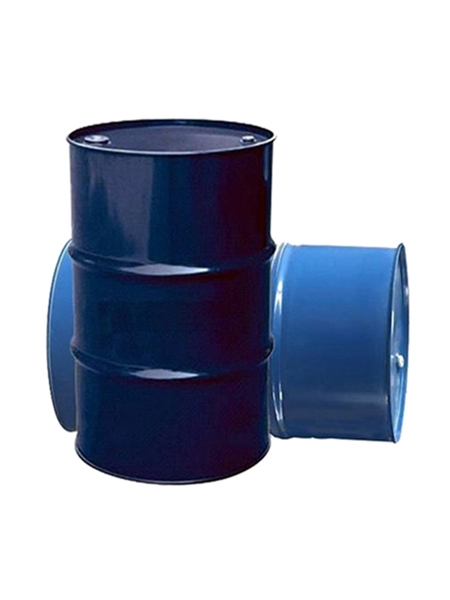
Dimethyl carbonate (DMC) is an important organic chemical intermediate. Due to the presence of carbonyl, methyl, methoxy, and carbonylmethoxy groups in its molecular structure, it can be widely used in organic synthesis reactions such as carbonylation, methylation, methoxylation, and carbonyl methylation. It is used to produce various chemical products including polycarbonates, isocyanates, polyurethanes, polycarbonate diols, allyl diethylene glycol carbonates, naphthyl methylcarbamate (Sevin), anisole, tetramethylammonium hydroxides, long-chain alkyl carbonates, carbamates, malonates, dimalonium, diethyl carbonate, triphosgene, furazolidone, methyl hydrazine, and methyl aniline. Because DMC is non-toxic, it can replace highly toxic phosgene, methyl chloroformate, and dimethyl sulfate as a methylating or carbonylating agent, improving the safety of production operations and reducing environmental pollution. As a solvent, DMC can replace Freon, trichloroethane, trichloroethylene, benzene, and xylene in paints, coatings, and cleaning solvents. As a gasoline additive, DMC can increase its octane number and oxygen content, thereby improving its anti-knock properties. In addition, DMC can also be used as an additive in detergents, surfactants, and softeners. Due to its wide range of applications, DMC is hailed as a "new cornerstone" of modern organic synthesis.
Properties and Uses
The excellent properties and unique molecular structure of DMC determine its wide range of applications, summarized as follows:
Replacing Phosgene as a Carbonylating Agent
Although phosgene (Cl-CO-Cl) has high reactivity, its extreme toxicity and highly corrosive byproducts put it under significant environmental pressure and will therefore be gradually phased out. DMC (CH3O-CO-OCH3) has a similar nucleophilic reaction center. When the carbonyl group of DMC is subjected to nucleophilic attack, the acyl-oxygen bond breaks, forming a carbonyl compound with methanol as a byproduct. Therefore, DMC can replace phosgene as a safer carbonylating agent. DMC can be used to synthesize carbonate derivatives, such as carbamate pesticides, polycarbonates, and isocyanates. Polycarbonate production is expected to be the largest sector in terms of demand, with over 80% of DMC predicted to be used in polycarbonate production by 2005.
DMC can also replace dimethyl sulfate as a methylating agent.
Dicranial dimethyl sulfate (CH3O-SO-OCH3) faces phasing out due to similar reasons to phosgene. When the methyl carbon in DMC is subjected to nucleophilic attack, its alkyl-oxygen bond breaks, generating methylated products. Furthermore, using DMC results in higher yields and simpler processes compared to dimethyl sulfate. Main applications include the synthesis of organic intermediates, pharmaceutical products, and pesticides.
DMC is also a low-toxicity solvent.
DMC possesses excellent solubility, with a narrow melting and boiling point range, high surface tension, low viscosity, and a small interfacial electrical constant. It also exhibits a high evaporation temperature and fast evaporation rate, making it suitable as a low-toxicity solvent in the coatings and pharmaceutical industries. As shown in Table 1, DMC not only has low toxicity but also possesses characteristics such as a high flash point, low vapor pressure, and high lower explosive limit in air, making it a green solvent that combines cleanliness and safety.
Comparison of DMC Performance with Other Solvents
Table 1 Comparison of DMC Performance with Other Solvents [4-5]...33
Property DMC Acetone Isobutanol Trichloroethane Toluene
Molecular Weight 90.08 58.08 60.09 133.41 92.1
Melting Point/℃ 2-4 -94.2 -88.5 -32.6 -94.97
Boiling Point/℃ 90 56.1 82.3 74.1 110.6
Flash Point (Closed Cup)/℃ 17 -18 11.7 ---- 4.4
Vapor Pressure (20℃)/kPa 5.60 24.66 4.27 13.33 2.93
Explosion Limits (%) 3.8~21.3 2.15~13 2.7~13.0 ---- 1.27~7.0
Viscosity/×10⁻³ Pa·s 0.625 0.316 2.41 0.79 0.579
Surface Tension/×10⁻⁵ N·cm⁻¹ 28.5 ---- 20.8 25.6 27.92
Steam Heat/J·g⁻¹ 369.06 523.0 676.58 249.82 363.69
Dielectric Constant 2.6 1.01 18.6 7.12 2.2
Relative Evaporation Rate 4.6 7.2 0.83 ---- 2.4
SP Value 10.4 10.0 10.9 8.6 8.4
Oral Lethal Dose (LD50)/kg 112900 ---- 5800 ---- 7530
Hygienic Permissible Concentration/mg·L 1 ---- 0.40 0.20 200×10-6 Gasoline Additive
DMC possesses properties such as high oxygen content (up to 53% oxygen content in the molecule), excellent octane-enhancing effect ((R+M)/2=105), no phase separation, low toxicity, and rapid biodegradability. This allows gasoline to use 4.5 times less DMC than methyl tert-butyl ether (MTBE) to achieve the same oxygen content, thereby reducing the total emissions of hydrocarbons, carbon monoxide, and formaldehyde in vehicle exhaust. Furthermore, it overcomes the disadvantages of commonly used gasoline additives, such as easy solubility in water and pollution of groundwater. Therefore, DMC will become one of the most promising gasoline additives to replace MTBE. At the 2002 American Chemical Society meeting, the pollution-free, low-cost technology for producing gasoline additive DMC from Tianjin University in my country was one of the three most noteworthy inventions of the conference, demonstrating the widespread recognition of the advantages of DMC as a gasoline additive.
-
About Tengjun
About Us Corporate Image Application Cases Leave a Message Contact Us -
Product Center
Silica Sol Series Polishing Fluids, Abrasive Fluids, and Polishing Pads Series Paint thinner, paint thinner, cleaning, and paint stripper series Organic Solvents Series View More + -
News
Company NewsIndustry NewsFrequently Asked Questions
0622023113(Please feel free to contact us for inquiries)
Pre-sales, sales, and after-sales online services