
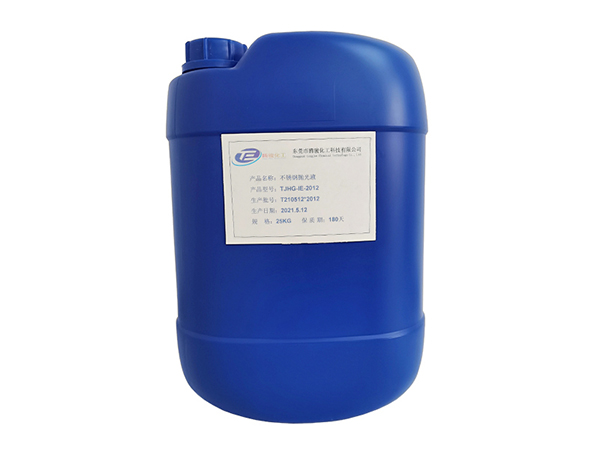
It's a water-soluble polishing agent, free of sulfur, phosphorus, and chlorine additives—that's polishing slurry. It possesses excellent degreasing, rust prevention, cleaning, and brightening properties, and can reveal the true metallic luster of metal products. It is stable, non-toxic, and environmentally friendly.
Now that we understand the function of polishing slurry, let's discuss its compositional classifications.
Polishing slurries can be broadly categorized based on their main components, including: diamond polishing slurries (polycrystalline diamond, monocrystalline diamond, and nano-diamond), silicon dioxide polishing slurries (CMP), cerium oxide, alumina, and silicon carbide.
Polycrystalline Diamond Polishing Slurry
Polycrystalline diamond polishing slurry uses polycrystalline diamond micropowder as its main component, combined with a highly dispersible formula, which maintains a high cutting rate while minimizing scratches on the abrasive material.
It is mainly used for grinding sapphire substrates, thinning the back of LED chips, grinding and polishing optical crystals and hard drive heads.
Silica Polishing Slurry
Silica polishing slurry (CMP polishing slurry) is a high-purity, low-metal-ion polishing product produced using high-purity silicon powder as raw material through a special process.
It is widely used for nanoscale high-planarity polishing of various materials, such as silicon wafers, germanium wafers, compound semiconductor materials gallium arsenide and indium phosphide, precision optical devices, sapphire wafers, etc.
Cerium Oxide Polishing Slurry
Cerium oxide polishing slurry uses micron- or submicron-sized CeO2 as abrasive. It features good dispersibility, fine particle size, uniform particle size distribution, and moderate hardness.
Suitable for precision polishing of high-precision optical instruments, optical lenses, microcrystalline glass substrates, crystal surfaces, and integrated circuit photomasks.
Alumina and Silicon Carbide Polishing Slurry
This polishing slurry uses ultrafine alumina and silicon carbide powder as abrasive, with micron- or submicron-sized abrasive as its main components.
Primarily used for grinding and polishing high-precision optical instruments, hard disk substrates, magnetic heads, ceramics, and fiber optic connectors.
Have you learned the above? If not, come and take a look!