
This polishing liquid is a water-soluble polishing agent that contains no sulfur, phosphorus, or chlorine additives. It possesses excellent degreasing, rust-preventing, cleaning, and brightening properties, and can enhance the luster of metal products beyond their original shine. This product is stable, non-toxic, and environmentally friendly.
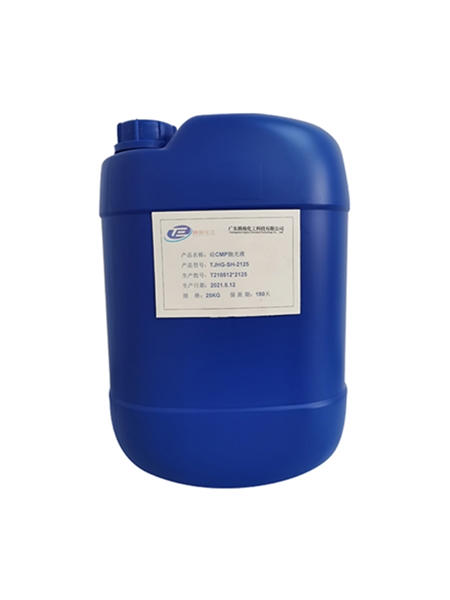
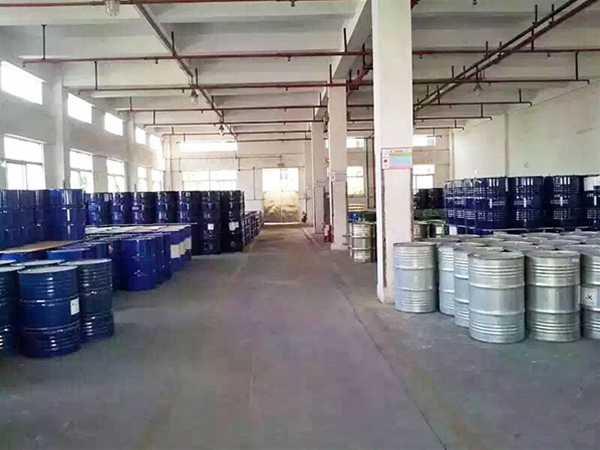
The liquid material used in the polishing process to remove grinding damage from silicon wafers is called polishing slurry (commonly known as polishing agent). Common types include silicon dioxide polishing slurry and chromium trioxide polishing slurry, which are pale yellow or yellow transparent liquids as shown in the image on the right (the color may appear distorted due to lighting).
Polishing slurry is a solution formulated from various chemical solutions. It plays a crucial role in the polishing process. Proper selection of polishing slurry can result in a bright, beautiful, and vibrant surface on the processed workpiece. It can also prevent rust, maintain and enhance the surface gloss, and clean the workpiece and grinding wheel. It removes oil stains, softens the workpiece surface to accelerate grinding, reduces the impact of the grinding wheel on the workpiece, and improves workpiece conditions. It is non-toxic, non-corrosive, and does not easily deteriorate.
There are many types of polishing slurries, and the selection should be based on the processing conditions. Polishing slurries exhibit unique effects in terms of finishing efficiency, grinding quality, and polished surface finish.
The acidity or alkalinity of the polishing slurry is its pH value. When the pH value of the polishing slurry is 9.6, the mechanical action of the polishing slurry is much greater than the chemical action, resulting in a relatively high removal rate and a high damage layer on the surface of the polished sheet after polishing, leading to a relatively large roughness. When the pH value of the polishing slurry increases to 10.84-11.34, the mechanical and chemical actions reach a state of equilibrium. At this point, the uniformity of the chemical action is good, resulting in low surface tension, good consistency in quality treatment, and a good surface polishing effect. When the pH value is greater than 11.67, the SiO2 hydrosol, under the action of strong alkali, generates water-soluble ammonium silicate, which prevents the SiO2 particles in the silica sol from playing a grinding role, turning it into a transparent liquid. At this point, the mechanical action is basically ineffective, and polishing is mainly chemical, resulting in an increase in surface pits and a renewed increase in surface roughness.